


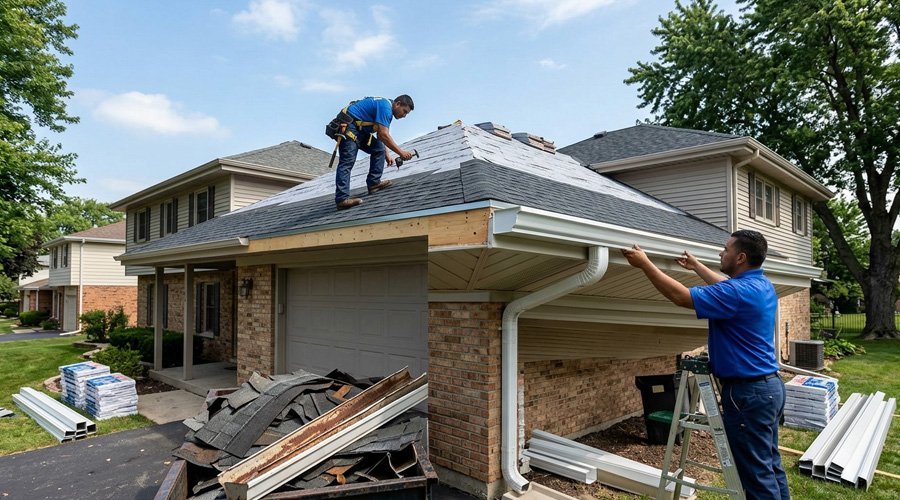
When a ceiling stain appears or a gutter overflows, it’s tempting to treat the roof and the gutter as separate jobs. In practice they form one path for rainwater, and planning repairs together often leads to a clearer diagnosis and less rework.
Roof and gutters share the same job
Rain that lands on roof sheets or tiles has only one way down. It runs across the surface and drops into the gutter, which carries it to downpipes and into stormwater drainage. If any part of that path slows or blocks, water backs up or spills over. The result can look much the same from inside the house.
Tile and steel roofs around Perth deal with long dry spells followed by sharp winter rain. Leaves build up over summer, while sealants dry out. Small shifts in brackets can change gutter fall by a few millimeters over several meters. A system that handled light showers in autumn can’t always cope with a heavier winter downpour. Many owners don’t notice that gradual loss of fall until winter stains appear on eaves.
Fascia boards sit at the center of this. They hold the gutter while they close off the rafter ends. When fascia swells or softens, gutter alignment shifts. Eaves and soffits below can then absorb moisture that doesn’t dry fast in cool weather.
That overlap is why many contractors start with the whole runoff path instead of one part.
Why a stain rarely points to a single cause
A brown mark on a ceiling or a damp patch near a window doesn’t identify the entry point. Water can travel along battens or sarking before it drops. It can also wick sideways from a valley or from behind a fascia. What looks like a roof leak can involve gutter overflow. What looks like a gutter fault can start higher up.
Leak detection works best as a process of elimination across roof cover and drainage. A check might start inside the roof space during daylight, then move outside to ridge capping and valleys. From there it follows step flashing and apron flashing where slopes meet walls or gutters. Each step rules out one path before the next is tested. Photos taken before and after rain help show where flow stalls.
Visible symptoms don’t diagnose the source on their own.
The roof edge works better with one plan
The junction where roof sheets end and gutters begin takes constant stress. Heat moves steel, while timber moves with moisture. Sealants age and brackets loosen. Small gaps open and close with the day. Failures here are rarely dramatic. They show up as slow drips or paint blisters, and blisters near downpipe bends often trace back to this movement.
Re-bedding and re-pointing ridge capping is often part of the same picture. Loose ridges let wind-driven rain enter near the top. That water travels down and loads gutters that were already near capacity. Valley gutters add another load point. They collect runoff from two slopes and send it toward one outlet. If a valley is rusted or clogged, it can send a surge that overwhelms a sound gutter.
Box gutters need special care. They sit behind parapets or between slopes where leaks stay hidden until damage is advanced. Access is tight, so repairs take longer than open eaves. Sizing and overflow provisions for these internal gutters should be set by a qualified professional with roof catchment calculations. A gutter-only visit can’t always establish those inputs. A joint survey of roof area and valley positions gives the detail needed for a sound design.
Planning both scopes at once lets the contractor see how loads move from ridge to outlet.
One point of responsibility helps when problems persist
Separate trades can each do solid work and still leave gaps in responsibility. One contractor repairs the roof cover and flashings. Another hangs gutters weeks later. If a drip returns near the eave, each side has reason to point to the other scope. The homeowner ends up arranging another visit without a clear answer.
A single documented scope with clear responsibility in writing lowers that risk. It doesn’t remove all chance of disagreement, but it makes plain who fixed flashings and who set gutter fall. Homeowners comparing options often ask a roofing company perth for combined roof restoration and gutter replacement so flashing details and gutter hang are covered under one set of project notes and written warranties.
Some independent gutter specialists also assess the full catchment well. Coordination can mean one lead contractor plus a named specialist, with each task and interface spelled out, rather than one company doing everything. Either model works when the paperwork is specific. It should name who is responsible for step flashing and apron flashing, as well as gutter alignment and downpipe connections.
Actual written warranties matter more than verbal promises. The coverage and duration of each warranty deserve a close look. Material warranties are best kept separate from workmanship terms so the distinction stays clear.
Smart sequencing limits rework and damage
Order of work affects quality. Overhead tasks drop dust and tools, ladders rest against gutters and fascia, and fresh paint marks easily. When gutter replacement follows roof repairs without a plan, new gutters can take hits before the job is done.
Coordination lets the team set an order that fits the site. In many cases the roof surface and flashings are repaired first. Gutters are then re-hung or replaced to suit the finished edge. There isn’t one fixed sequence for every house. Tile repairs and steel re-screwing each need a different approach. The point is to agree on the order before work starts so finished parts aren’t used as access.
Scaffolding and site access shape this choice. One setup for both scopes cuts repeat hire and repeat disruption. It also gives workers stable footing for high eaves or two-story walls. Safe access allows more careful work. It lets the crew check fall with a level and test downpipes with water rather than rush from a ladder. Testing outlets with a hose before packing up shows whether water flows through them.
Weather windows count too. Perth winters bring the test storms, but coatings and re-pointing need dry days to cure. Many owners schedule restoration for late summer or autumn. That timing gives sealants time to set before gutters face peak flow.
Materials, fit and water capacity have to line up
Steel roofing and gutters last longer when their coatings suit each other. Colorbond and Zincalume steel are common across Perth homes. When profile and color are specified at the same time, the roofline looks settled. It also lets the contractor use matching fixings and touch-up systems from the same supply chain. Matched fixings lower the chance of early rust marks too.
Fascia condition decides a lot here. New gutters can’t hang straight on soft timber. A joint inspection finds rot early, allowing the crew to replace short runs of fascia before gutters go up. That avoids pulling new work back down for a missed repair.
Downpipes and stormwater drainage complete the picture. A new gutter won’t fix ponding if downpipes are too few or poorly placed. Undersized outlets choke first during heavy bursts. Leaf load matters as well. Homes near large trees often need gutter guards or leaf mesh. Fitting mesh during gutter replacement is cleaner than adding it later over fresh edges. It also lets the installer match mesh type to gutter profile while brackets are exposed.
Capacity checks tie this together. Gutter width and downpipe number should reflect roof catchment and valley positions. Fall should be even with no flat spots, and overflow measures should have a clear path away from eaves and soffits. These checks call for roof drainage design by a qualified professional, not guesswork from ground level.
What to compare before you book combined work
Start with diagnosis rather than product. Ask the contractor to walk the full runoff path from ridge to stormwater outlet. Good reports use photos and short notes to show ridge capping faults, valley wear, flashing gaps and gutter fall. They also note fascia soft spots and downpipe blockages. That record helps with approvals and insurance too, since insurers want clear evidence when storm damage links roof and gutter faults from the same event. Catchment notes should list the roof areas feeding each run.
Ask whether repair or replacement fits each part. Sound sheets don’t need swapping because gutters do. Solid gutters don’t need swapping because ridge pointing does. A contractor with experience across both roof restoration and gutter work can often save sound parts and target spending where wear is real. Quotes that push full replacement deserve a closer look if they lack photos or measurements to back the call.
Compare combined and staged quotes on like terms. Ask for itemized labor and materials for each scope, including how scaffolding is charged. It’s also worth asking what happens if hidden fascia rot appears once gutters come off. Written terms generally identify who approves extra work and at what rate. Cost promises are easier to assess when they include numbers. One mobilization may lower duplication, but only itemized figures show if that holds for a given house. Staged work can suit tight budgets when sound parts can wait.
Practical details matter before work is booked. These include safe access plans for steep or high roofs, expected noise and work hours, and how waste is removed. Coating cure times and rain holds need attention too. The scope should identify who arranges any plumbing or building approvals where needed. Copies of the signed scope and the actual written warranties for materials and labor provide a record of the agreement. A clear start date helps plan around drying time.
Roofing projects run smoother when owners treat gutters as part of the roof envelope rather than an add-on. A short delay to align both scopes can prevent repeat visits. It also makes future checks faster because the whole edge is documented.
Coordinated work won’t suit every budget or timeline. Yet for many homes with age wear or storm marks across roof and edge, one plan for the whole water path is a more straightforward way to get a dry eave and a steady drain.
